Author

J.A. Conejero

Browsing

Anomalous diffusion (AD) describes transport phenomena where the mean-square displacement (MSD) of a particle does not scale linearly with time, deviating from classical diffusion. This behavior, often linked to non-equilibrium phenomena, sheds light on the underlying mechanisms in various systems, including biological and financial domains.

Integrating insights from anomalous diffusion into financial analysis could significantly improve our understanding of market behaviors, similar to their impacts on biological systems. In financial markets, accurately estimating asset volatility—whether historical or implied—is vital for investors.

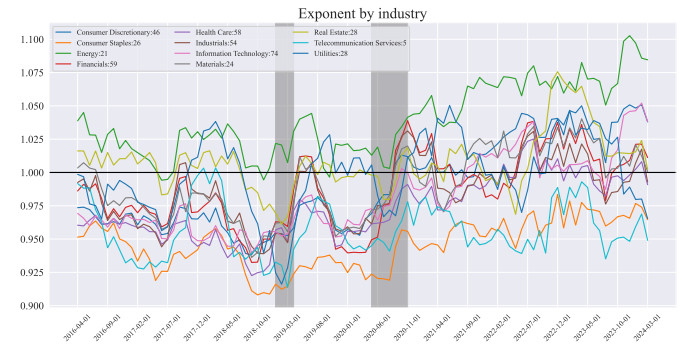
We introduce a novel methodology to estimate the volatility of stocks and similar assets, combining anomalous diffusion principles with machine learning. Our architecture combines convolutional and recurrent neural networks (bidirectional long short-term memory units). Our model computes the diffusion exponent of a financial time series to measure its volatility and it categorizes market movements into five diffusion models: annealed transit time motion (ATTM), continuous time random walk (CTRW), fractional Brownian motion (FBM), Lévy walk (LW), and scaled Brownian motion (SBM).

Our findings suggest that the diffusion exponent derived from anomalous diffusion processes provides insightful and novel perspectives on stock market volatility. By differentiating between subdiffusion, superdiffusion, and normal diffusion, our methodology offers a more nuanced understanding of market dynamics than traditional volatility metrics.

R.V. Arévalo, J.A. Conejero, Ò. Garibo-i-Orts, A. Peris. Stock volatility as an anomalous diffusion process[J]. AIMS Mathematics, 2024, 9(12): 34947-34965. DOI: 10.3934/math.20241663

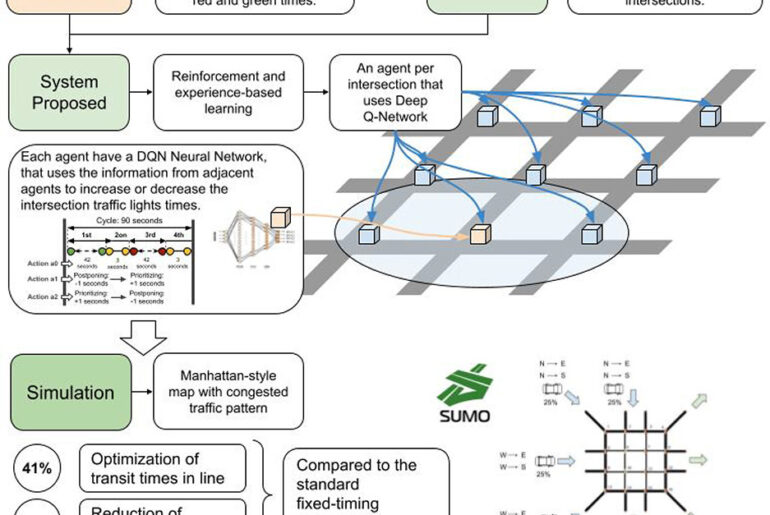
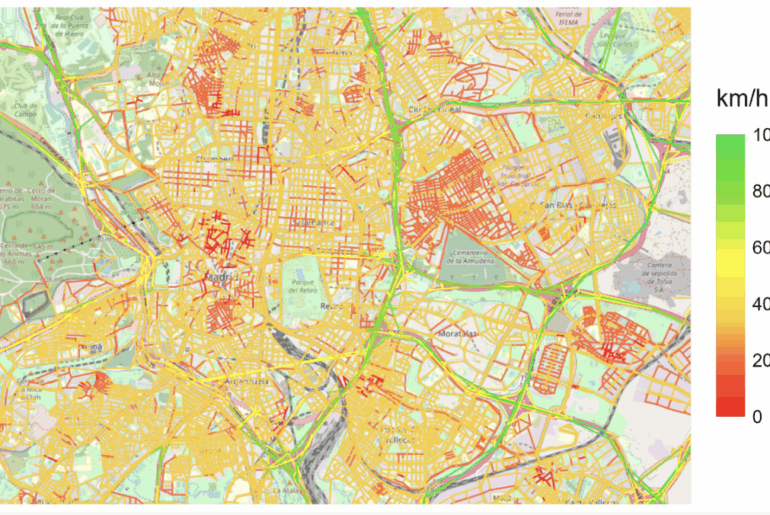
As our cities become more complex and traffic demand grows, managing such traffic efficiently becomes challenging. Hence, solutions that allow building upon the current traffic light systems and that can be readily deployed are of global interest. In this work, we address the challenge of improving traffic light management at intersections. We propose an agent-based traffic light control system where an agent, one per intersection, dynamically regulates the light’s phase cycle depending on the current traffic conditions. To this end, we will rely on Deep Networks to adequately train agents to make good decisions. Simulation results in a realistic scenario using SUMO show that our proposed approach can significantly reduce waiting times, improving transit times by 44% compared to the standard fixed-timing method. Additionally, to assess the effectiveness and reliability of our control algorithm, we introduce new performance metrics. Summarizing:

  • Every agent manages one intersection using deep Q-learning with experience replay.
  •  Each agent optimizes its intersection and reduces vehicle waiting times.
  • Compared with fixed time, our algorithm achieves a 44% reduction in waiting times.
  • Thanks to deep Q-networks, changes in agents’ actions allow traffic light adaptation

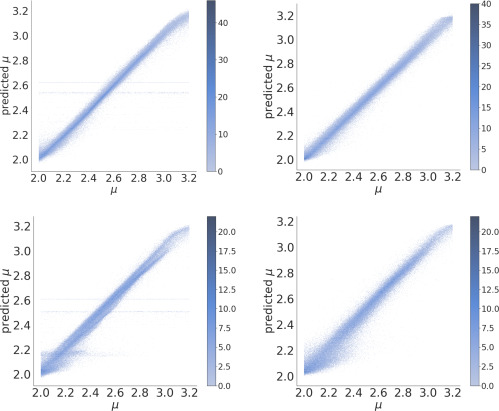
We study the accuracy of machine learning methods for inferring the parameters of noisy fractional Wu–Baleanu trajectories with some missing initial terms. Our model is based on a combination of convolutional and recurrent neural networks (LSTM), which permits the extraction of characteristics from trajectories while preserving time dependency. We show that these approach exhibit good accuracy results despite the poor quality of the data. Summarizing:

  • We combine convolutional neural networks and LSTM units.
  • We predict the parameters from noisy trajectories that may have lost some terms.
  • The errors in the predictions are of the same error magnitude as the noise.

Ò. Garibo-i-Orts et al. Predictive deep learning models for analyzing discrete fractional dynamics from noisy and incomplete data.» Chinese J. Phys. 89 (2024): 1276-1285. DOI:10.1016/j.cjph.2024.04.010


How are you contributing to SDGs and measuring sustainable improvements? AI solutions can help you to quantify it. This pilot experience shows the case of the university’s scientific contributions.

we have an initial pilot experience with this AI solution to quantify the impact of the scientific contributions of the university members to the SDGs agenda. For this experience, we have downloaded 50,000 abstracts of works with at least one author from UPV and more than 500 characters in length since 1990. Our solution is based on the Automatic Classification of Impact to Sustainable Development Goals (ASDG) pipeline, which relies on four language models (NMF, LDA, BERTopic, and Top2VEC). This has been applied to automatically identify these scientific contributions’ potential impact on the SDG agenda.

See more details at: D. Domingo-Calabuig, S. Hoyas, R. Vinuesa, and J.A. Conejero. Visualizing Academic Contributions to Achieving the Sustainable Development Goals through AI: The Case of Universitat Politècnica de València. ACS Sustainable Resour. Manage. 2024. https://doi.org/10.1021/acssusresmgt.4c00074

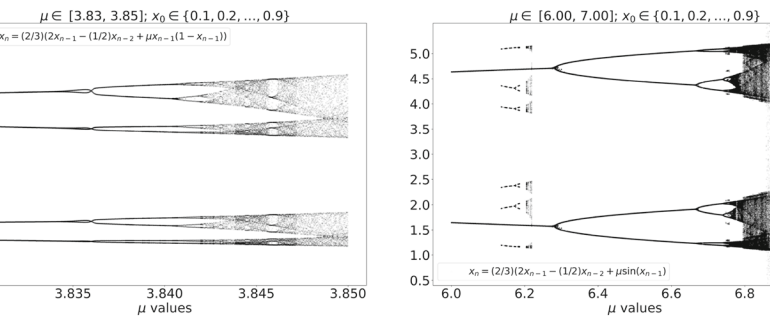
The classification of time series using machine learning (ML) analysis and entropy-based features is an urgent task for the study of nonlinear signals in the fields of finance, biology and medicine, including EEG analysis and Brain–Computer Interfacing. As several entropy measures exist, the problem is assessing the effectiveness of entropies used as features for the ML classification of nonlinear dynamics of time series. We propose a method, called global efficiency (GEFMCC), for assessing the effectiveness of entropy features using several chaotic mappings. GEFMCC is a fitness function for optimizing the type and parameters of entropies for time series classification problems. We analyze fuzzy entropy (FuzzyEn) and neural network entropy (NNetEn) for four discrete mappings, the logistic map, the sine map, the Planck map, and the two-memristor-based map, with a base length time series of 300 elements. FuzzyEn has greater GEFMCC in the classification task compared to NNetEn. However, NNetEn classification efficiency is higher than FuzzyEn for some local areas of the time series dynamics. The results of using horizontal visibility graphs (HVG) instead of the raw time series demonstrate the GEFMCC decrease after HVG time series transformation. However, the GEFMCC increases after applying the HVG for some local areas of time series dynamics. The scientific community can use the results to explore the efficiency of the entropy-based classification of time series in “The Entropy Universe”. An implementation of the algorithms in Python is presented.

J.A. Conejero, A. Velichko, Ò. Garibo-i-Orts, V. Izotov, V.-T. Pham. Exploring the entropy-based classification of time series using visibility graphs from chaotic maps. Mathematics 202412, 938. DOI:10.3390/math12070938

A three-differential-equation mathematical model is presented for the degradation of phenol and p-cresol combination in a bioreactor that is continually agitated. The stability analysis of the model’s equilibrium points, as established by the study, is covered. Additionally, we used three alternative kernels to analyze the model with the fractal–fractional derivatives, and we looked into the effects of the fractal size and fractional order. We have developed highly efficient numerical techniques for the concentration of biomass, phenol, and p-cresol. Lastly, numerical simulations are used to illustrate the accuracy of the suggested method.

A. Akgül and J.A. Conejero. Fractal Fractional Derivative Models for Simulating Chemical Degradation in a Bioreactor. Axioms, 13(3), 151 , 2024. DOI:10.3390/axioms13030151

Algorithms that use tensor decompositions are widely used due to how well they perfor with large amounts of data. Among them, we find the algorithms that search for the solution of a linear system in separated form, where the greedy rank-one update method stands out, to be the starting point of the famous proper generalized decomposition family. When the matrices of these systems have a particular structure, called a Laplacian-like matrix which is related to the aspect of the Laplacian operator, the convergence of the previous method is faster and more accurate. The main goal of this paper is to provide a procedure that explicitly gives, for a given square matrix, its best approximation to the set of Laplacian-like matrices. Clearly, if the residue of this approximation is zero, we will be able to solve, by using the greedy rank-one update algorithm, the associated linear system at a lower computational cost. As a particular example, we prove that the discretization of a general partial differential equation of the second order without mixed derivatives can be written as a linear system with a Laplacian-type matrix. Finally, some numerical examples based on partial differential equations are given.

Keywords: tensor decompositions,  rank-one tensors, high-dimensional linear systems, laplacian-like matrices,
partial differential equations.

J. Alberto Conejero, Antonio Falcó, María Mora–Jiménez. A pre-processing procedure for the implementation of the greedy rank-one algorithm to solve high-dimensional linear systems[J]. AIMS Mathematics, 2023, 8(11): 25633-25653. DOI:10.3934/math.20231308

With the increasing demand for online shopping and home delivery services, optimizing the routing of electric delivery vehicles in urban areas is crucial to reduce environmental pollution and improve operational efficiency. To address this opportunity, we optimize the Steiner Traveling Salesman Problem (STSP) for electric vehicles (EVs) in urban areas by combining city graphs with topographic and traffic information. The STSP is a variant of the traditional Traveling Salesman Problem (TSP) where it is not mandatory to visit all the nodes present in the graph. We train an artificial neural network (ANN) model to estimate electric consumption between nodes in the route using synthetic data generated with historical traffic simulation and topographical data. This allows us to generate smaller-weighted graphs that transform the problem from an STSP to a normal TSP where the 2-opt optimization algorithm is used to solve it with a Nearest Neighbor (NN) initialization. Compared to the approach of optimizing routes based on distance, our proposed algorithm offers a fast solution to the STSP for EVs (EV-STSP) with routes that consume 17.34% less energy for the test instances generated.

This work has been the result of a students’s project in the subject Project III in the Data Science degree. It has been published in Algorithms:

Ahsini, Y.; Díaz-Masa, P.; Inglés, B.; Rubio, A.; Martínez, A.; Magraner, A.; Conejero, J.A. The Electric Vehicle Traveling Salesman Problem on Digital Elevation Models for Traffic-Aware Urban Logistics. Algorithms 2023, 16, 402. https://doi.org/10.3390/a16090402

The evolution of severe acute respiratory syndrome coronavirus 2 (SARS-CoV-2) in humans has been monitored at an unprecedented level due to the public health crisis, yet the stochastic dynamics underlying such a process is dubious. Here, considering the number of acquired mutations as the displacement of the viral particle from the origin, we performed biostatistical analyses from numerous whole genome sequences on the basis of a time-dependent probabilistic mathematical model. We showed that a model with a constant variant-dependent evolution rate and nonlinear mutational variance with time (i.e., anomalous diffusion) explained the SARS-CoV-2 evolutionary motion in humans during the first 120 wk of the pandemic in the United Kingdom. In particular, we found subdiffusion patterns for the Primal, Alpha, and Omicron variants but a weak superdiffusion pattern for the Delta variant. Our findings indicate that non-Brownian evolutionary motions occur in nature, thereby providing insight for viral phylodynamics.

L. Goiriz, R. Ruiz, Ò. Garibo-i-Orts, J.A. Conejero, G. Rodrigo. A variant-dependent molecular clock with anomalous diffusion models SARS-CoV-2 evolution in humans, Proc. Natl. Acad. Sci. U.S.A. 120 (30) e2303578120, https://doi.org/10.1073/pnas.2303578120 (2023).

See also this comment on our paper:  S. Manrubia, J.A. Cuesta. Physics of diffusion in viral genome evolution, Proc. Natl. Acad. Sci. U.S.A. 120 (34) e2310999120, https://doi.org/10.1073/pnas.2310999120 (2023).